maanantai 8. heinäkuuta 2013
Traveling together with my Boyfriend
tiistai 2. heinäkuuta 2013
Camping Trip to the Talkeetna River
tiistai 25. kesäkuuta 2013
Welcome to the USA - You're suspicious!
What a "friendly" reception I had when I arrived in Anchorage, Alaska! At passport control, I was taken to another room where the officials first made me sit and wait, then asked me some questions, and finally searched my backpack. How suspicious is it to come for a two-month backpacking trip without clear plans?! And, in your passport, to have all those visas to and stamps from many different countries! And not have a permanent job back home! I guess next time when I go traveling, I should print out my account statement... I understood they were worried that I would work here without a work permit. But I am only planning to do some voluntary work, to work for my room and board in order to keep my travel costs low. The customs officer confirmed that such an exchange deal is fine as long as I do not get paid.
Anyway, all the other people here have been really nice to me. I hosted Sage, an Anchorageite (=someone from Anchorage), for a few days during her bicycle trip to Europe last year. Now she was jumping for joy knowing that I was coming to Alaska - and she bought a car for my use while I am here! Unbelievable! What an amazing friend I have! Here is "my" new car:
Below is a street view from Anchorage. Tomorrow I get to see what lies behind those mountains surrounding the city, as I go on a camping trip to the Talkeetna River with some CouchSurfers.
sunnuntai 26. helmikuuta 2012
Art and Rakia in the Countryside of BiH
From Sarajevo I hurried to Mostar to see the famous bridge and the former front line.
Then I continued to the countryside to Zelenkovac where an artist named Borislav Jankovic has built a wooden house with an art gallery & bar and funky towers. In Zelenkovac life is ecological, visitors come and go, the ambiance is easy-going and rakia (home-made spirits) flows.
The entrance...
...to my little room on the roof:
Then I continued to the countryside to Zelenkovac where an artist named Borislav Jankovic has built a wooden house with an art gallery & bar and funky towers. In Zelenkovac life is ecological, visitors come and go, the ambiance is easy-going and rakia (home-made spirits) flows.
The entrance...
...to my little room on the roof:
Learning about the Siege of Saravejo
Travel blog updates should be written while still traveling - not back home, six months after the trip! Anyhow, I'll now try to finish the story of my trip to the Balkans last summer.
In Bosnia and Herzegovina my first (quick) stop was in Sarajevo. The most intriguing thing leaving me strongest memories was an exhibition about the 3 ½-year-long siege of Sarajevo. As I've grown up safely in Finland, it's very hard for me to imagine how it has been to live in such conditions.
"The siege of Sarajevo led to shortages of all supplies of life - food, water, electricity and gas. People survived on humanitarian aid, which was also sold at market places. People were often killed while queuing for water.
Electricity of gas was even less available. Survival produced new innovations. Makeshift stoves were made and used both for heating and cooking. A variety of gas and oil lamps were also improvised. Anything that could burn was used as heating fuel.
On tables in Sarajevo there was less and less food. Consequently, lawns around houses were turned into vegetable gardens. Dandelions and nettles were picked at the local green plots. A specific war cookery was compiled. People ate everything, but there was nothing..."
Some photos of a memorial wall of the war in Bosnia and Herzegovina:
In Bosnia and Herzegovina my first (quick) stop was in Sarajevo. The most intriguing thing leaving me strongest memories was an exhibition about the 3 ½-year-long siege of Sarajevo. As I've grown up safely in Finland, it's very hard for me to imagine how it has been to live in such conditions.
"The siege of Sarajevo led to shortages of all supplies of life - food, water, electricity and gas. People survived on humanitarian aid, which was also sold at market places. People were often killed while queuing for water.
Electricity of gas was even less available. Survival produced new innovations. Makeshift stoves were made and used both for heating and cooking. A variety of gas and oil lamps were also improvised. Anything that could burn was used as heating fuel.
On tables in Sarajevo there was less and less food. Consequently, lawns around houses were turned into vegetable gardens. Dandelions and nettles were picked at the local green plots. A specific war cookery was compiled. People ate everything, but there was nothing..."
Some photos of a memorial wall of the war in Bosnia and Herzegovina:
tiistai 20. syyskuuta 2011
Мостови Балкана - Folk Music Festival in Serbia
What was the best hitchhiking experience during my trip? It was in Serbia on the way from Montenegro to Bosnia and Herzegovina (Actually right after the worst hitchhiking experience!) when I ended up going, with the people who picked me up, to a folk music and dance festival I knew nothing about beforehand. I was lucky; usually you would see people wearing traditional clothes performing only at touristic restaurants. But there I was, in a small village between fields watching the groups that had come all over the Balkans. There was food, too, as it was some kind of a religious holiday and the Orthodox church had set the table for everyone.
sunnuntai 28. elokuuta 2011
Montenegro - my favourite of the Balkan countries
Now I know what is my favourite country in the Balkans: Montenegro! It's full of amazingly beautiful landscapes; it's so picturesque, so scenic. Mountains and canyons, the turquoise sea - magnificent scenery everywhere. Enjoy the following photos!
Sveti Stefan, an islet connected to the shore by a narrow isthmus and crammed full of terracotta-roofed dwellings, used to house a simple fishing community until it was turned into a luxury hotel. From the 1960s to the 1980s it was a big hit with the rich and famous. It is a beautiful place, but accommodation - even in the township onshore - is expensive, so I can't really recommend it to backpackers on a low budget. I enjoyed my swim around the island and ended up spending the night on a sun chair of a hotel for free.
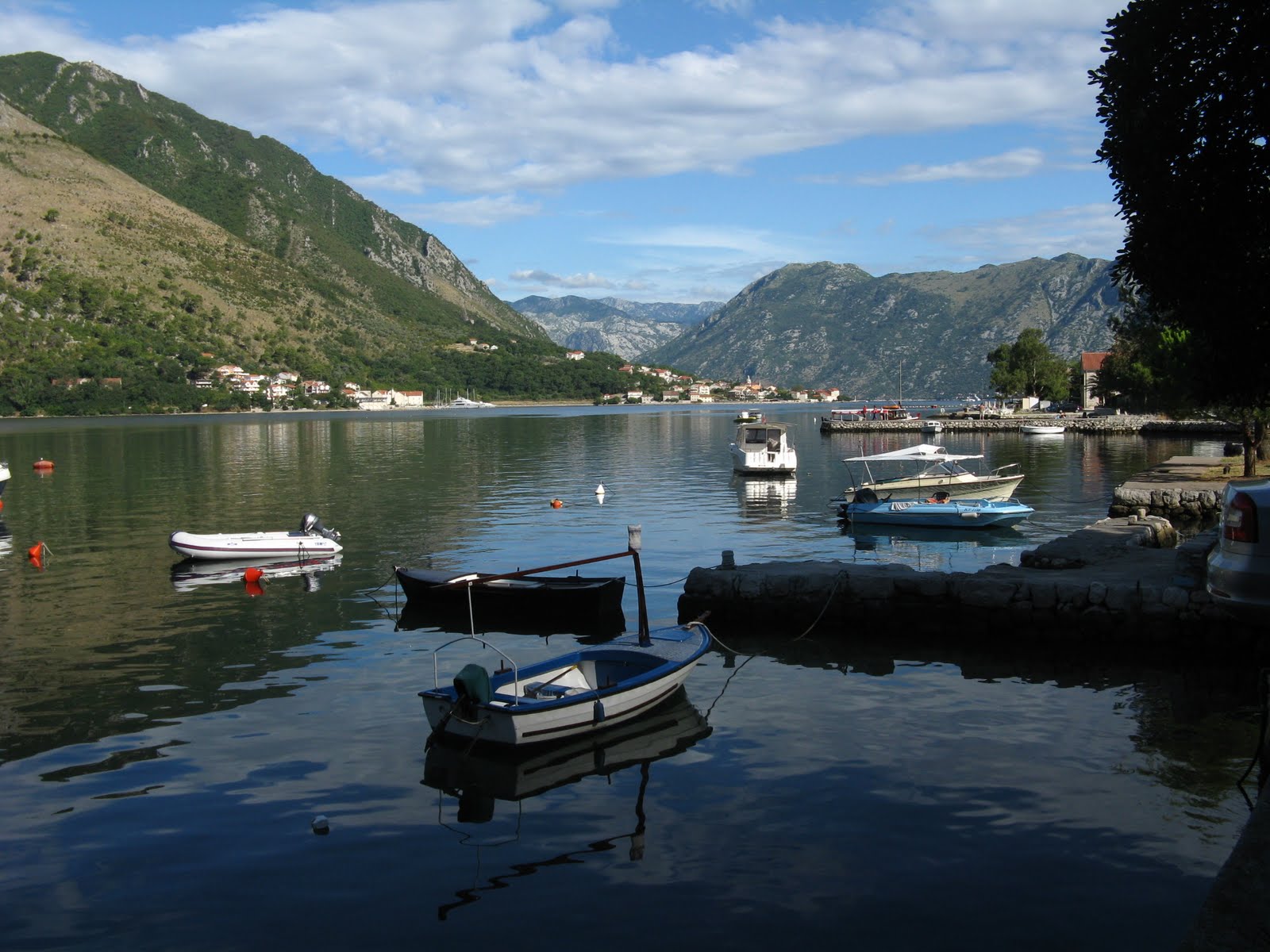
My next stop was the stunning bay of Kotor surrounded by steep limestone mountains. I first visited the old town of Kotor (Unesco World Heritage listed) and then pedaled around the bay with a bicycle I rented from my hostel.
I decided to skip the capital, Podgorica, and went straight to Biogradska Gora National Park (easily accessible by hitchhiking!), where I rented a cabin for a night and strolled around the lake in one of Europe's last few remaining primeval forests.
My last stop in Montenegro was Durmitor National Park where I did a leisurely walk around the Black Lake and a strenuous 12-hour hike to the highest peak in the park, Bobotov Kuk, 2523 m. (What made the hike so hard was that I took a wrong path at the beginning and had to take some difficult and scary shortcuts to reach my destination.)
---
p.s. I'm already back home. I just haven't had time to make this update earlier...
Sveti Stefan, an islet connected to the shore by a narrow isthmus and crammed full of terracotta-roofed dwellings, used to house a simple fishing community until it was turned into a luxury hotel. From the 1960s to the 1980s it was a big hit with the rich and famous. It is a beautiful place, but accommodation - even in the township onshore - is expensive, so I can't really recommend it to backpackers on a low budget. I enjoyed my swim around the island and ended up spending the night on a sun chair of a hotel for free.
My next stop was the stunning bay of Kotor surrounded by steep limestone mountains. I first visited the old town of Kotor (Unesco World Heritage listed) and then pedaled around the bay with a bicycle I rented from my hostel.
I decided to skip the capital, Podgorica, and went straight to Biogradska Gora National Park (easily accessible by hitchhiking!), where I rented a cabin for a night and strolled around the lake in one of Europe's last few remaining primeval forests.
My last stop in Montenegro was Durmitor National Park where I did a leisurely walk around the Black Lake and a strenuous 12-hour hike to the highest peak in the park, Bobotov Kuk, 2523 m. (What made the hike so hard was that I took a wrong path at the beginning and had to take some difficult and scary shortcuts to reach my destination.)
---
p.s. I'm already back home. I just haven't had time to make this update earlier...
Tilaa:
Blogitekstit (Atom)